
Luxembourg · Architecture, inclusion and shared space
Architecture without barriers: the essentials of Luxembourg’s law of 7 January 2022
Who is concerned, which deadlines, what financial aid and what penalties, and how to adapt a place step by step.
At a glance
- 1 July 2023In force: rules apply to new projects
- 1 January 2032Existing places open to the public must comply
- €24,000Maximum grant per place (50% of costs excl. VAT)
- 30 June 2028Last day to apply for the grant, before works start
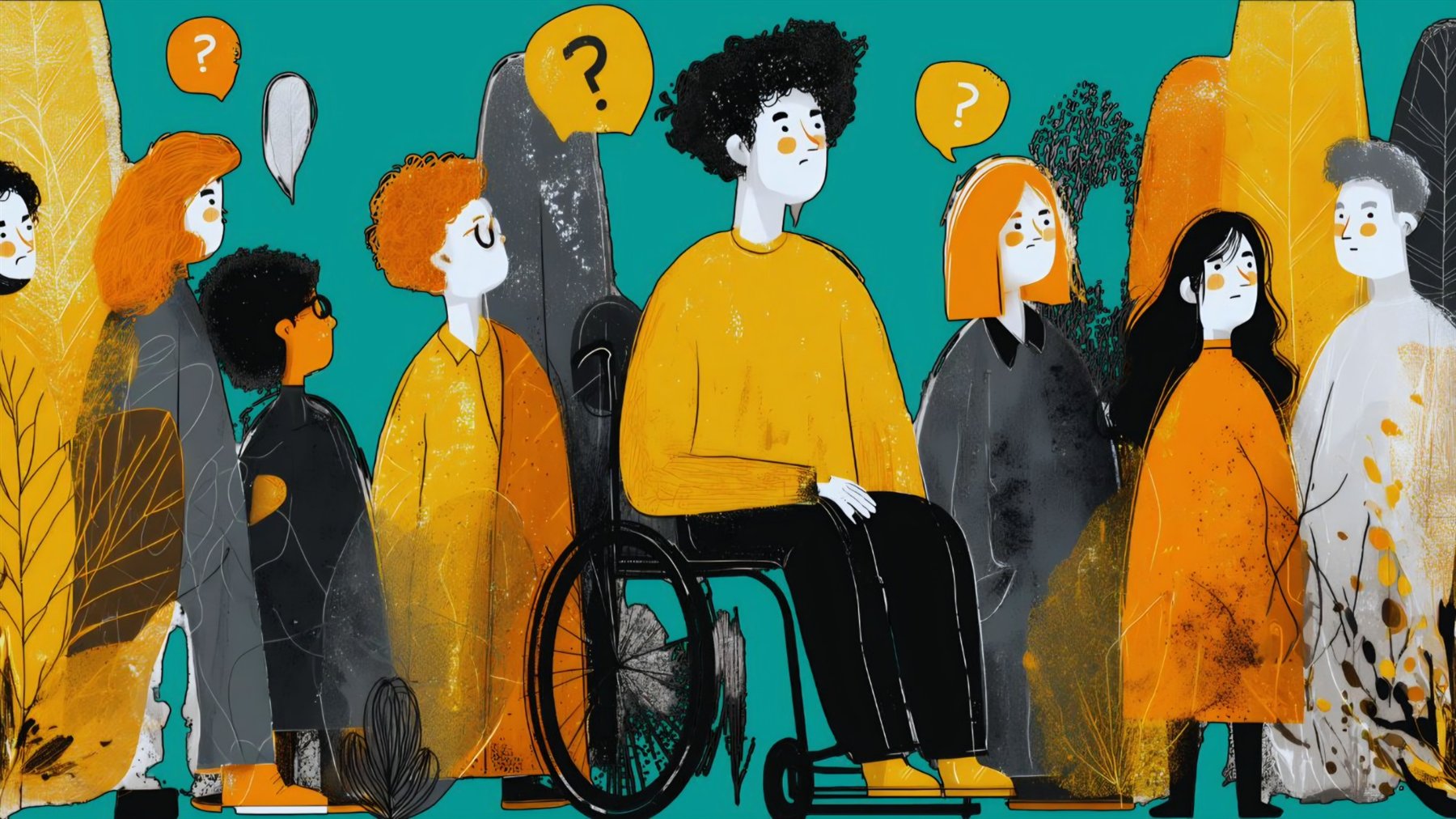
How well do we know ourselves, and who walks beside us?
The truth of a space reveals itself when we dare to stop and look at the world around us, not through our usual routes, but through a quiet, honest question: who is really walking beside us?
According to Eurostat, in 2024 23.9% of people aged 16 and over in the European Union, almost one in four, reported a long-standing limitation in their usual activities because of health problems. In Luxembourg, the latest figure published by Eurostat (2022) is 28.5%, more than one adult in four. And these figures cover more than visible physical conditions: a large share of disabilities cannot be seen (chronic illness, impaired sight or hearing, the after-effects of injuries), and, according to common estimates, 15–20% of the population is neurodivergent (autism, ADHD, dyslexia or heightened sensory sensitivity).
People aged 16 and over with a long-standing limitation in their activities because of health
- Severe limitation
- Some limitation
These numbers are not dry report statistics. They could be us. Our parents, children, partners, neighbours, colleagues, or simply the person who has just passed us in the street. Any one of us may at any moment discover how an ordinary threshold, a noisy hall or blinding light turns into an insurmountable wall.
That is why architects, engineers, designers, developers and owners carry a great mission and responsibility: to bring together safety, flawless function and, of course, beauty, creating an environment that does not divide people into “convenient” and “inconvenient”, but honours everyone.
The language of meaning: what lies behind these words?
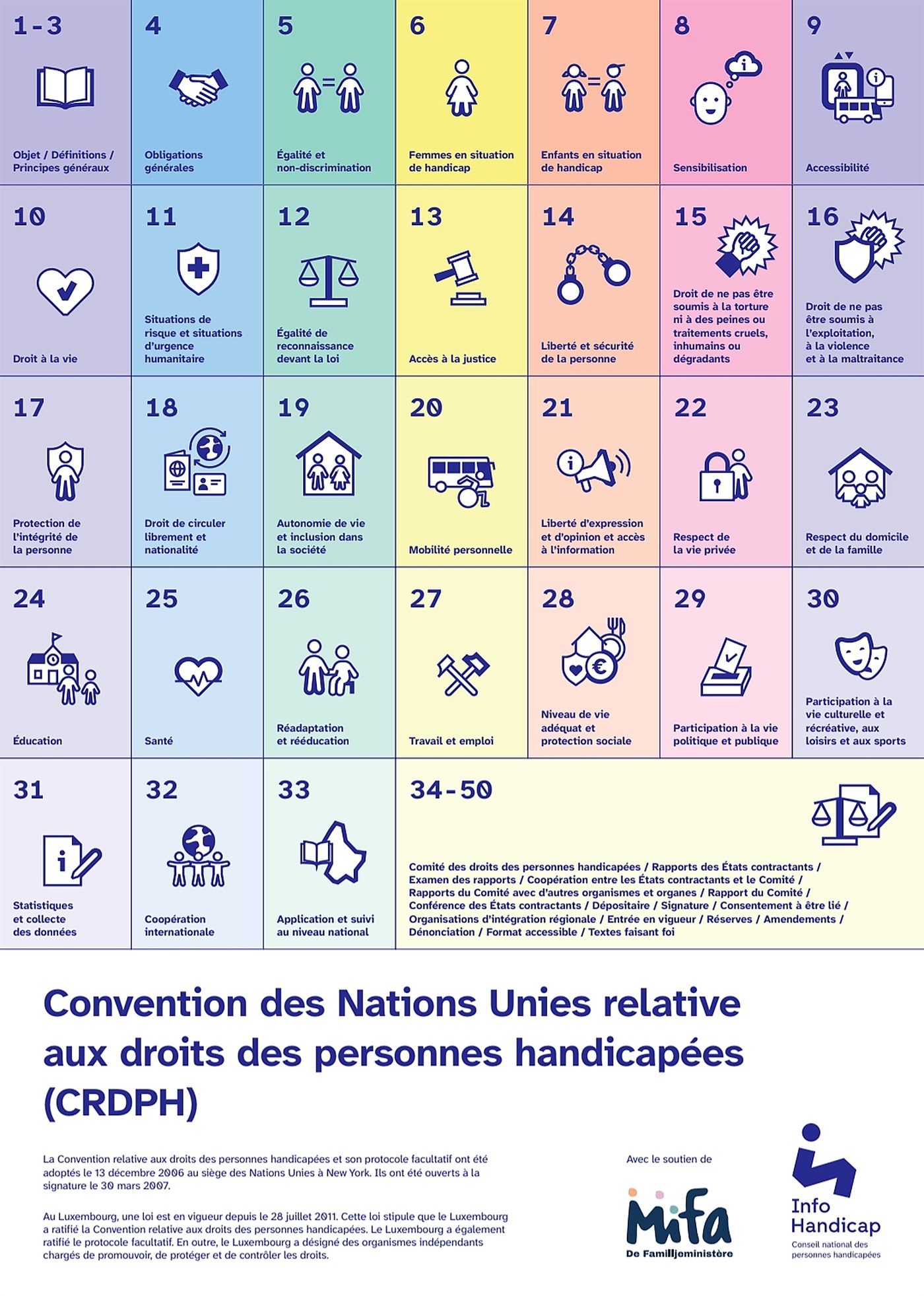
When we talk about space and people, words easily turn into formal terms. But if we give them back their original meaning, each one reveals another side of our shared reality, from legal precision to deep humanity.
- Accessibility Luxembourg’s legislation (the law of 7 January 2022) rests on the principle of design for all (conception pour tous): designing environments, buildings, routes and services so that everyone can use them independently, safely and with dignity, whatever their age, health or particular needs. This is not an exception for a few, but the basic comfort and openness of the space itself.
- Inclusion Under the UN Convention on the Rights of Persons with Disabilities (CRPD), inclusion means the full and effective participation of every person in society on an equal basis with others, with respect for human dignity, autonomy and natural diversity. Accessibility makes it possible to enter and use a space; inclusion makes sure the person remains at home in it: heard, equal, accepted.
- Disability Under Article 1 of the UN Convention, persons with disabilities include those who have long-term physical, mental, intellectual or sensory impairments which, in interaction with various barriers, may hinder their full and effective participation in society on an equal basis with others. The key point is that the barrier is not born in the body alone, but in the encounter between a person’s condition and an unsuitable or even hostile environment.
- Invisible disability These are long-term physical, sensory, cognitive or chronic conditions without obvious outward signs (chronic pain, fatigue, impaired sight or hearing, cardiovascular conditions, the after-effects of injuries or mental health conditions). Looking “like everyone else” does not mean that stairs, loud noise or standing for a long time are not a serious challenge.
- Neurodivergence In today’s humanist and social tradition (including the concept of neurodiversity presented on platforms such as the World Economic Forum), this is a non-medical umbrella term describing natural differences in how the brain works and perceives the world, including autism, ADHD, dyslexia, dyspraxia and dyscalculia. It is not a “fault”, but a different way of thinking, attending and feeling, which brings depth and original solutions and calls for careful attention to sensory load.
A space that honours people, and works for everyone
When we move from big ideas to the practice of Luxembourg’s law of 7 January 2022 (in force since 1 July 2023), the first reaction is often defensive: “It’s complicated. It’s expensive. And anyway, we hardly have any wheelchair users.”
Yet behind this law there is neither bureaucracy nor a ramp built just to tick a box. True accessibility does not sort people into categories: it creates one coherent ecosystem of comfort, where what is vital for almost one person in four quietly becomes a source of calm and ease for everyone:
- Each of us is only temporarily able-bodied Today we run up the stairs; tomorrow we carry a heavy suitcase, push a pram, walk on crutches after an injury, or simply grow older. Then a level path without thresholds, doors that open easily and places to rest along long corridors stop being “special requirements” and become natural care for everyone.
- Space is perceived with all the senses at once Architecture speaks to people not only through the width of passages, but also through quiet, light and clear landmarks. When a hall or office has acoustics that absorb the hum, when light is soft and does not flicker, when glass partitions and stair edges have clear visual contrast, and there is a quiet zone for focus or rest next to a noisy space, the environment protects everyone’s energy and nervous system, whether or not they have particular visual, hearing or sensory needs.
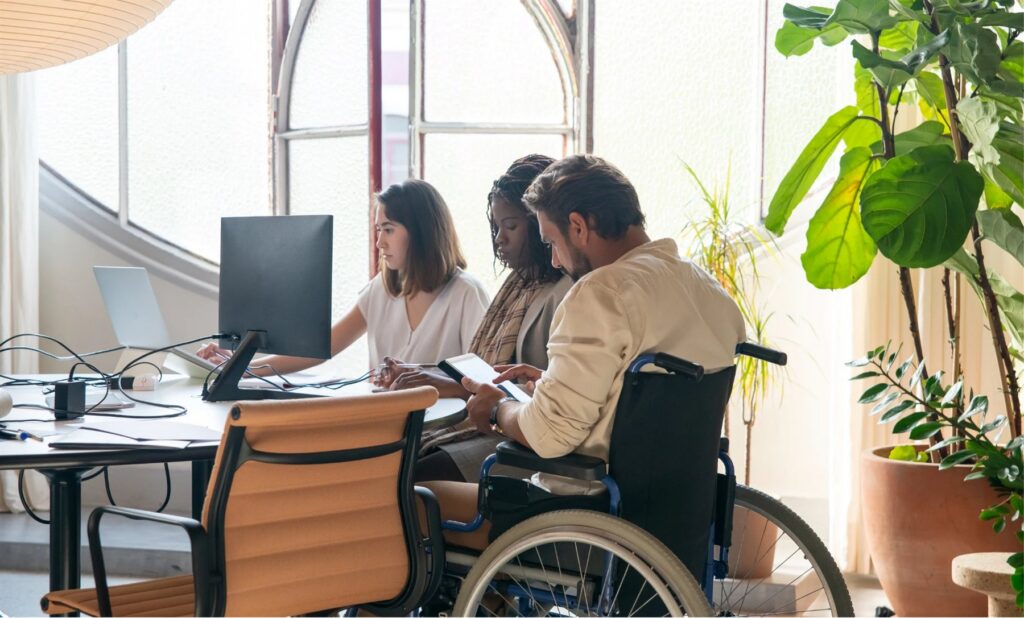
- A door closed to one is closed to many An inaccessible venue, school, clinic or residential building shuts out not just one person, but their family, friends and colleagues. The same goes for workplaces and places of study: when only the visitor-facing “front” is adapted, while lecture rooms, offices, laboratories, kitchens and meeting rooms are forgotten, organisations lose real talent and create barriers exactly where human potential should flourish.
Who is concerned: deadlines, grants and the cost of inaction
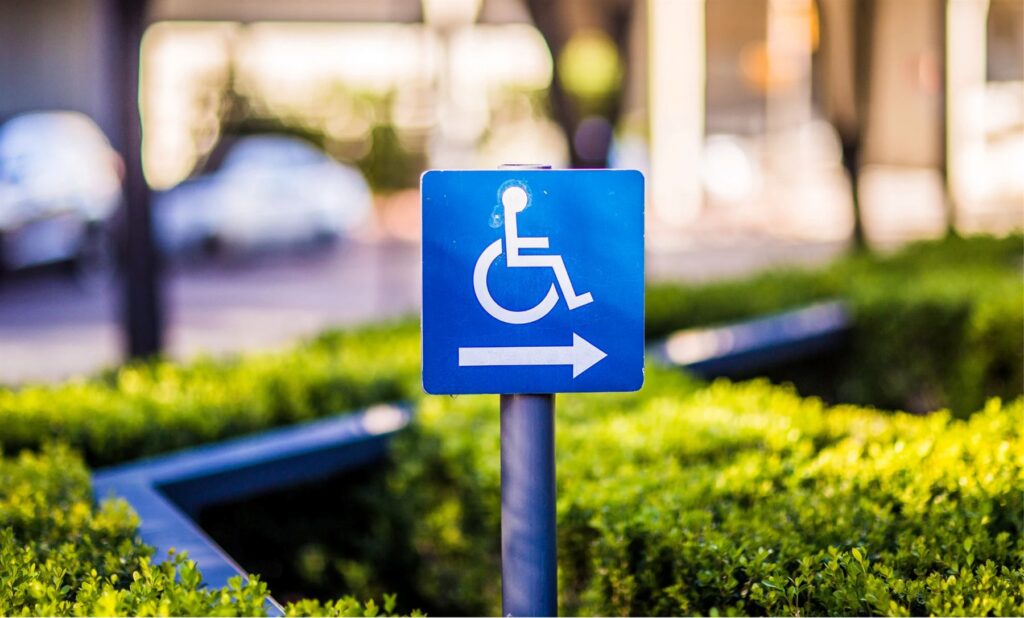
The law of 7 January 2022 covers three key areas of the built environment in Luxembourg:
- Places open to the public: educational institutions, medical centres, cultural and sports venues, shops, restaurants, hotels, banks and offices that receive visitors.
- Public roads: streets, pavements, pedestrian crossings, public transport stops, squares, pedestrian zones and parking.
- Collective residential buildings: entrances, common areas, lifts and the grounds of apartment buildings. In new buildings, at least 10% of the dwellings must also be accessible to people with reduced mobility.
Deadlines and public funding
- New construction and changes of use The requirements apply already, to every building permit application submitted after 1 July 2023.
- Existing places open to the public Must be brought into line by 1 January 2032.
- Ministry of Family grant For making places open to the public accessible: it covers 50% of the cost of works, studies and advice, excluding VAT, up to €24,000 per place. The application must be submitted by 30 June 2028, before the works start, and the works completed by 30 June 2031.
- ADEM support for workplace adaptation For an employee with disabled-worker status (salarié handicapé), the State can cover all or part of the cost of adapting the workstation and access to work. The employer applies to ADEM’s service for disabled employees.
The cost of inaction: penalties under the law
Carrying out works that breach the accessibility requirements, or failing to bring an existing place into line in time, carries real liability (Article 13 of the law):
Natural persons (clients, contractors, owners): a fine of €251 to €125,000 and imprisonment of eight days to two months, or one of these penalties only.
Legal persons (companies and organisations): a fine of €500 to €250,000.
Possible additional consequences: bringing the works into line or demolition at the offender’s expense, closure of the establishment, publication of the judgment, exclusion from public procurement. Refusing a reasonable accommodation is punished under Article 455 of the Criminal Code (a fine of up to €25,000). Technical inspectors who certify non-compliant works face the same penalties.
When a place is ready to change: a clear path to adaptation
The biggest mistake when renovating a building or venue is to start “by eye”: buying the first ramp that comes along or renovating without regard to the standards. Very often such decisions end in double costs and loss of the right to the grant.
Step 1. An honest look and a professional accessibility audit
Bring in an accessibility specialist. They will follow the whole route of a visitor, pupil or employee, from the car park and the threshold to the acoustics of the hall, lighting, lecture rooms, meeting rooms and toilets, and draw up a map of barriers and priorities.
Step 2. Looking for smart solutions and alternatives
In Luxembourg’s older buildings, the specialist’s task is to balance the law and the structure: a removable ramp with a call button, contrasting markings, acoustic panels, solutions of equivalent effect or, if a physical change is truly impossible, a technical justification for an official request for a derogation to the Ministry of Family (on grounds of technical impossibility, disproportionate burden or heritage protection).
Step 3. Fixing the budget and applying for the grant (before the works)
Based on the audit, quotes are gathered and the application is submitted to the Ministry of Family or ADEM. Not a single nail should be hammered before the application is officially approved.
Step 4. Carrying out the works with attention to detail
Once funding is confirmed, the works are carried out with exact compliance with heights, slopes, and acoustic and lighting values. A technical inspector for accessibility then issues the certificate of conformity of the works.
Step 5. Openness to people, and a new quality of place
Update the accessibility information about your place on your website, on Google Maps and at the entrance, so that everyone knows they were thought of in advance.
True architecture is accessible architecture, and it begins with an inner readiness to say to every person: “You have the right to be here. And this space was created with you in mind.”
So all these standards are not there to frighten or to add costs. They are about forward-looking, progressive solutions in every area of our lives, for people of all ages and for our whole diverse society. They are also about mental and physical health, about development, earnings and shared well-being.
Who to turn to in Luxembourg: key institutions and associations
In Luxembourg, support and accessibility rest on a combination of state bodies and non-governmental organisations: ASBLs (associations sans but lucratif, non-profit associations often founded by families, professionals or people with lived experience of disability or neurodivergence), foundations and social initiatives. They advise, audit, train, defend rights and help turn the law into real solutions in the city and in buildings.
- Ministry of Family, Solidarity, Living Together and Reception of RefugeesMinistère de la Famille, des Solidarités, du Vivre ensemble et de l’AccueilCoordinates policy on accessibility and the rights of persons with disabilities, examines derogation requests and runs the main support and grant programmes. mfsva.gouvernement.lu
- Info-HandicapConseil national des personnes handicapées asblThe national information and coordination centre on disability, bringing organisations together, advising on accessibility and rights and running training with partners. info-handicap.lu
- Adapth asblThe national competence centre for the accessibility of buildings, urban space and transport; technical advice, project reviews, audits and training for professionals and businesses. adapth.lu
- Fondation Lëtzebuerger Blannevereenegung (FLB)A foundation supporting people with visual impairments, developing accessible housing, support, vocational integration and awareness work. flb.lu
- A.M.V.A.Association pour Mal-Voyants et AveuglesAn association of blind and partially sighted people that supports the community, defends its interests and promotes everyday accessibility. amva.lu
- Solidarität mit Hörgeschädigten asblSmH, HörgeschädigtenBeratungSocial support and advice for deaf and hard-of-hearing people in Luxembourg. hoergeschaedigt.lu
- ZEFI asblZesumme fir InklusiounPromotes everyday inclusion, supports children, young people and families (including on special educational needs and support) and develops inclusive practices. zefi.lu
- HALTO asblA solidarity network for relatives and families caring for people with disabilities or chronic illness in Luxembourg. halto.lu
- Aura Dorée asblAn association supporting parents, children and families, including on neurodivergence, emotional well-being and harmonious family life. auradoree.lu
- Fondation Autisme Luxembourg (FAL)A foundation set up by families, supporting autistic people and their relatives and developing specialised services, housing, day centres and educational programmes. fal.lu
- Trisomie 21 Lëtzebuerg asblA self-help and support association for people with Down syndrome and their families, offering advice and cultural and inclusive initiatives. trisomie21.lu
- Be Human asblA Luxembourg non-profit promoting inclusion, equality and support for people with invisible disabilities through education, training, communities and projects such as the Hidden Disability Hub. behuman-asbl.com
- Real Impact HubSupports businesses and organisations in building accessibility and inclusion into their premises, teams and services. realimpact.lu
Where to find the full list: a more detailed directory of associations, services and initiatives in Luxembourg is available from Info-Handicap, notably in the Guide du handicap, and HALTO asbl keeps a useful list of public services and support organisations (halto.lu/en/anlaufstellen).
Official texts
- Law of 7 January 2022 on accessibility for all of places open to the public, public roads and collective residential buildings (in particular Art. 4, 7, 12, 13 and 16). legilux.public.lu
- Grand-ducal regulation of 8 February 2023 on accessibility for all of places open to the public and public roads. legilux.public.lu
- UN Convention on the Rights of Persons with Disabilities (2006), ratified by Luxembourg by the law of 28 July 2011.
- Guichet.lu, financial aid for making places open to the public accessible. guichet.public.lu; State support for disabled employees. guichet.public.lu
- Eurostat, Population with disability (EU-SILC, indicator hlth_silc_12). ec.europa.eu/eurostat
- Doyle, N. (2020). Neurodiversity at work: a biopsychosocial model and the impact on working adults. British Medical Bulletin, 135(1), 108–125. DOI: 10.1093/bmb/ldaa021